
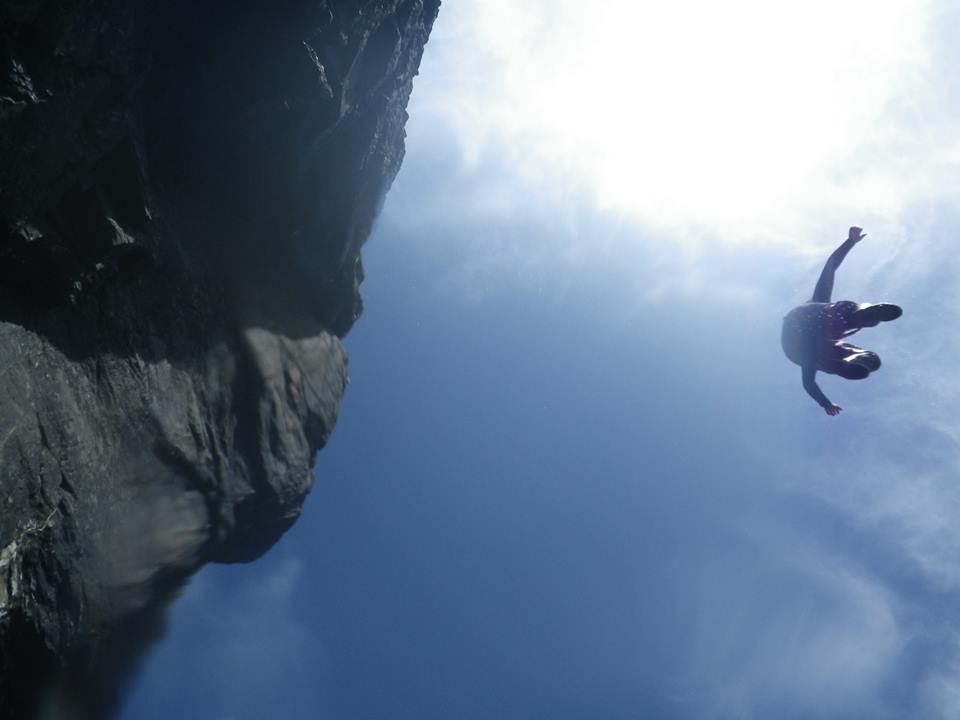
COAST – WHAT – ING?..................COASTEERING OF COURSE!
Ask anyone involved in the outdoors what ‘coasteering’ is and you will no doubt get a pretty accurate answer. Ask the same question 15 years ago and most people probably would have fobbed you off with some weird and wonderful guess at what you were talking about! However, the last few years have seen a huge increase in the number of providers offering this activity to groups and individuals.
So what exactly is Coasteering? Well, the accepted definition is that ‘Coasteering involves traversing along a stretch of intertidal zone, often as part of an organised group activity. Participants travel across rocks and through water, using a variety of techniques, including climbing, swimming and jumping into water. Coasteering guides and participants wear appropriate clothing and equipment while undertaking coasteering activities.’ Pretty adventurous stuff, by the sound of it! Think of any stretch of rocky coast that you know, be it in Clare, Donegal, Wicklow, Down or Antrim. Imagine traversing along it, in and out of the sea, on a good day, with calm seas. Imagine the same bit of water, in poor weather, with an onshore wind……… how different an environment is that?
Coasteering is unusual in that it has developed so quickly, from a niche activity run by a small number of providers, into a popular activity that is primarily undertaken as a group activity, delivered by many outdoor providers around the coast. In recent years, it has received some bad press, through a combination of accidents on poorly organised coasteering sessions and ‘tombstoning’ incidents. As a result of these incidents, a working group was established by the Royal National Lifeboat Institution, the National Water Safety Forum and the Maritime and Coastguard Agency, which included representatives from most of the popular coasteering locations as well as the majority of recognised ‘technical experts’. Industry standards and good practice were agreed – the target was to agree what is ‘as safe as necessary’ rather than ‘as safe as possible’. This was important, as the environment in which coasteering takes place is so variable and dynamic, that st
andards appropriate all of the time in one location may be different to what is needed in another – even the same location on different days or at different tides can be worlds apart. The good practice guidelines that have been agreed are now seen as a model of good practice by the outdoor industry regulator in the UK and by all of the relevant water safety groups and the Coastguard. These guidelines will continue to be developed by the National Coasteering Charter.
So what does this mean for me, the adventurous outdoors enthusiast, the mum or dad keen on giving your kids a great day out, or someone looking to give their friends a new experience? Is it something I should consider? WITHOUT A DOUBT! – GO FOR IT!
Coasteering is an amazing activity, which gets people into places that they may never otherwise imagine even existed…….! Swimming below cliffs, exploring caves, jumping onto zawns, clambering around huge boulders, seeing seals close up,……..the list goes on and on. But what will a session involve? Well, generally the instructor will have talked to the parent or organiser well before the day itself and will build a plan around their needs and expectations…….think of physical ability, age, swimming ability, time of year, accessibility of locations……..you don’t have to jump from big heights, be exposed to big waves or be miles from a road to have an amazing session………. The group will be kitted out with appropriate kit……..as a minimum this will include a full length wetsuit, a helmet and a buoyancy aid. The instructor will also ensure that participants wear appropriate footwear, although many centres now provide specialist footwear, such as canyoneering boots, as well as gloves.
The session can involve all sorts of things, such as ‘washing machine’ pools, with waves breaking over you, jumping from different heights into the sea, traversing along a cliff, knowing that at any stage you could be off it into the water! Don’t worry, the instructor will know what its all about and ensure it goes well. The session will probably get more challenging as it goes on……who wants to jump straight into the sea from 5 or 6 metres, right from the off! Everything will be new, event for experienced outdoor enthusiasts who may already be rockclimbers and kayakers. Think of it……climbers never want to get this close to the water and paddlers never want to get this close to the land!
So…..you have just been swept through a narrow gap in the rocks by a breaking wave………..clamber up here……..through this little tunnel……..look down…..wow…………..a small jump into a big, deep zawn…….and look over there…….a narrow ramp leading up to another ledge……. In the distance you can see the coast stretch out before you. But you haven’t a clue about what is around the next corner!
Go on – give it a go…….. there are providers of coasteering around the country – get in touch with them and transport yourself to a world that you never knew existed!
Any well run provider of coasteering will be able to give you copies of their guidelines on how they deliver the activity. Many providers, particularly in Northern Ireland are now ‘Adventuremark’ accredited, which will give you the reassurance that the activity is being run appropriately, according to good practice guidelines.
Useful Information:
www.tollymore.com
www.outdoorsni.com
www.nationalwatersafety.org.uk/member/projects/info/wg1210_coasteering4.pdf
Trevor Fisher is the Centre Manager of Tollymore National Outdoor Centre and has been involved in the Development of the National Coasteering Charter over the past three years.